Florence holds a dense collection of art, architecture, and history within a compact historic center. Streets reveal churches, museums, bridges, and squares built across several centuries. Many travelers arrive with limited time and encounter long lines during peak seasons. Knowing the major Florence landmarks before arrival helps reduce confusion and delays. Early entry tickets, morning visits, and awareness of walking distances often turn a rushed itinerary into a steady experience through some of the most recognized Florence historic sites.
Iconic Landmarks and Historic Places to Visit in Florence
Florence Cathedral and Brunelleschi’s Dome
Florence Cathedral, or Santa Maria del Fiore, rises over the city in a way that still stops people in their tracks. Its vast scale can feel surprising even after seeing photos. Work began in the late 13th century, but the great dome came later, when Filippo Brunelleschi introduced a daring construction method that changed architectural history.
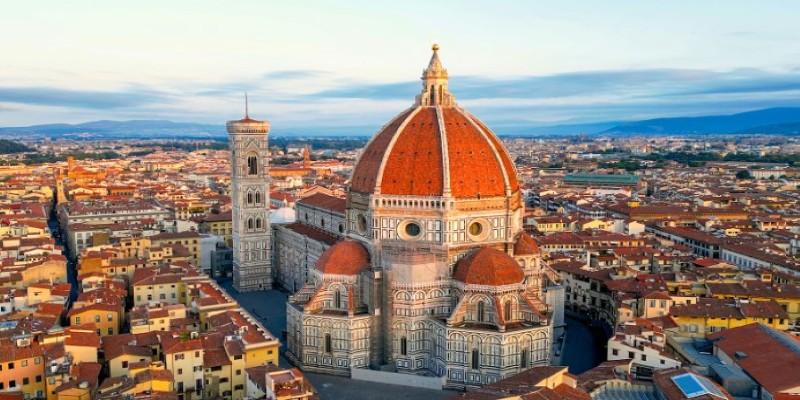
The cathedral complex draws heavy crowds, especially after mid-morning, so timed tickets make the visit far smoother and cut down on wasted time in the square. The dome climb is demanding, with more than 450 steps, narrow passages, and steep sections that can feel intense in summer heat.
At the top, Florence opens out in every direction. Inside, the painted dome commands attention, and many visitors pause in silence, simply staring upward at the enormous frescoes above.
Piazza della Signoria
Piazza della Signoria is Florence's public stage, part crossroads, part open-air museum. For centuries, decisions for the city played out here, and the surrounding stone still feels official. Statues command the space, from the David replica near the entrance to Cellini's Perseus holding his prize under the loggia. By midafternoon, the square tightens with tour groups and street performers, so arriving early brings room to breathe.
You might catch café staff setting chairs and hearing only footsteps and the fountain splash. Step into the Loggia dei Lanzi for free marble drama beneath high arches. After rain, the paving shines; slow your pace, and enjoy softer light for photos. In summer heat, the shade of Palazzo Vecchio can feel like a gift.
Ponte Vecchio
Ponte Vecchio spans the Arno like a lived-in street, not just a bridge. Tiny shopfronts cling to its sides, glittering with gold, watches, and window displays that feel unchanged for centuries. The version you see today rose in the 1300s after floods wiped out earlier crossings, a reminder that this river can still set the pace in Florence.
At midday, the passage turns into slow traffic, with elbows, cameras, and stops in the narrow lanes. Come later, around early evening, and the flow eases. Above the stalls sits the Vasari Corridor, a Medici shortcut toward Palazzo Pitti, sometimes closed for restoration. For the classic view, step onto the riverbank at sunset. Listen for nearby musicians, linger as lights come on slowly.
Uffizi Gallery
The Uffizi Gallery contains one of the most important Renaissance art collections in Europe. Paintings by Botticelli, Leonardo da Vinci, and Caravaggio appear throughout long hallways and gallery rooms. Visitors often underestimate waiting times. During high season, entry lines without reservations may extend beyond two hours. Timed tickets reduce this problem and allow smoother entry.
Inside the museum, large windows overlook the Arno River and Palazzo Vecchio. These viewpoints provide short pauses between galleries filled with artwork. Museum fatigue becomes noticeable after extended visits, so many travelers plan two hours inside the building. Photography without flash remains permitted in most sections, though security staff monitors the rule closely.
Palazzo Vecchio
Palazzo Vecchio stands beside Piazza della Signoria and once served as Florence’s government headquarters. Thick stone walls and defensive towers reflect medieval architecture. The interior now contains museum rooms, council chambers, and decorated halls. The Hall of the Five Hundred attracts attention due to massive frescoes covering both walls and the ceiling.
Visitors sometimes overlook the tower climb. The stairway leads to wide views across rooftops and the cathedral dome. Lines usually remain shorter here than at the cathedral tower. Many walking routes combine Palazzo Vecchio with nearby Florence attractions since several landmarks sit within the same neighborhood.
Basilica of Santa Croce
Santa Croce is more than a basilica; it feels like Florence's living memory. Inside, monumental tombs honor Michelangelo, Galileo, and Machiavelli, turning a church visit into a quiet walk through the city's greatest names. Several chapels hold Giotto frescoes that still pull your eyes upward, even in crowded moments.
Parts of the complex stay under restoration, a long-running response to the Arno flood of 1966, and a reminder that preservation never really ends. Plan around an hour, and save time for the cloisters and small museum rooms. Summer afternoons scorch the stone piazza, so mornings are kinder.
Pitti Palace and Boboli Gardens
Pitti Palace stands across the Arno River and once served as a residence for the Medici family. The palace now contains multiple museums displaying Renaissance and Baroque artwork. Behind the palace lie the Boboli Gardens. Wide paths, statues, and fountains spread across a large hillside landscape. The gardens offer a quieter atmosphere compared with crowded central Florence landmarks.
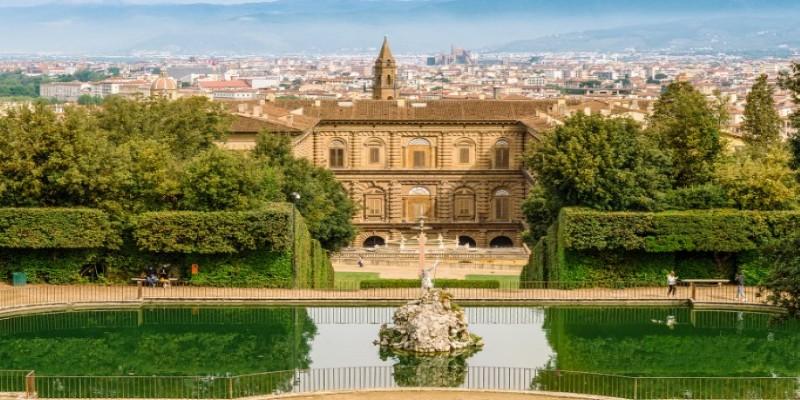
Walking distances inside the park surprise many visitors. Gravel paths and uphill sections require comfortable shoes and water during warm seasons. Late afternoon visits often feel more relaxed once museum crowds begin leaving the palace complex.
San Lorenzo Market and Medici Chapels
San Lorenzo combines daily market activity with historic architecture. Outdoor stalls sell leather goods, clothing, and souvenirs. Nearby indoor food halls serve regional Tuscan meals. Next to the market stand the Medici Chapels, burial places of the powerful Medici family. Sculptures designed by Michelangelo decorate parts of the interior.
Crowds shift throughout the day. Morning hours attract local shoppers, while midday brings travelers searching for food and gifts. Security rules inside the chapels restrict large bags, so small backpacks or shoulder bags work best.
Conclusion
Florence offers an unusual concentration of history within a walkable area. Cathedrals, museums, markets, and bridges sit only minutes apart. Good planning helps avoid long queues and midday crowds. Early reservations, comfortable walking routes, and realistic timing make visits smoother. Florence landmarks and Florence historic sites continue drawing visitors each year, not only for art and architecture but for the sense of history present in nearly every street.