Why “natural” oils feel like simple upgrades
It often starts with something small: a new bottle that smells “clean,” a sheen on the skin that looks healthy, or a meal that feels more “real” when you cook it in olive oil instead of something labeled processed. The upgrade can feel almost automatic, like nature equals gentler and therefore safer.
Part of that confidence comes from how oils behave in the moment. They’re familiar, edible, and they create immediate feedback—softness, slip, gloss, fragrance. The brain tends to treat those cues as proof that the body is “agreeing,” even when the only thing happening is a surface effect: oils coat, they reduce water loss for a while, and aromas can change mood without changing what’s irritating a nose or a stomach.
The mismatch shows up later, and it can be inconsistent. An oil that felt soothing yesterday may feel heavy or stingy today, especially after heat, air, or repeated use changes what’s in the bottle. Because the shift is gradual—and the label still says “natural”—it’s easy to misread irritation, breakouts, or queasiness as random rather than as a predictable response to how oils behave over time.
Where daily oils actually interact with the body

It can be subtle at first: a warm flush on the cheeks after a new face oil, or a faint throat tickle when a diffuser has been running a little too long. The tricky part is that oils don’t just “sit there.” They meet the body at a few specific borders—skin, airways, and the lining of the mouth and gut—and those borders are built to let some things through and push other things away.
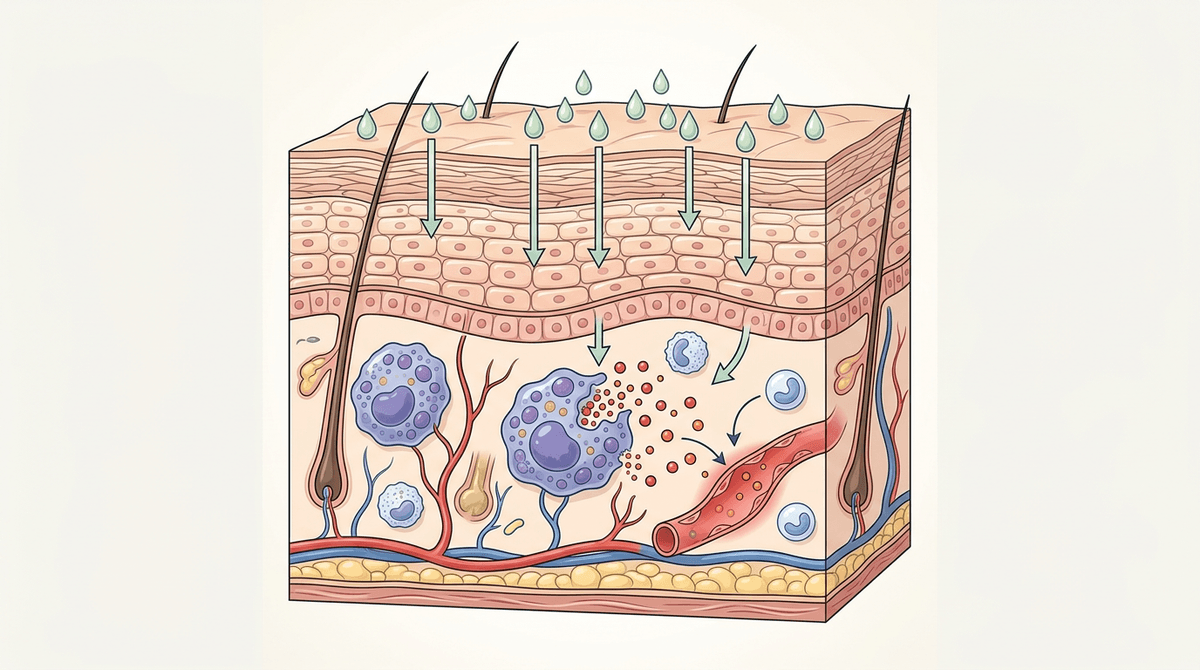
On skin, oils spread into the outermost layer and mix with the skin’s own lipids, which can temporarily change how tightly that layer holds water. That same film can also trap heat and sweat, or interact with the contents of pores, so the result may look like “glow” one day and feel like congestion the next. With essential oils, the experience can shift faster because small aromatic molecules can move into the outer layer more easily, and repeated contact may nudge the immune system toward irritation rather than tolerance.
In the nose and throat, inhaled compounds land on moist tissue that’s sensitive to chemical concentration, not just scent. In the stomach, oils don’t coat like lotion—they’re broken down and absorbed—so a rich or concentrated dose can feel fine one day and heavy or nauseating another, depending on timing, amount, and what else was eaten.
The mechanisms beneath benefits: fats, barriers, signaling
Sometimes the first clue is sensory: a slightly sharper smell when the pan heats up, or a face oil that suddenly feels “hot” instead of comforting. That shift can be confusing because the bottle hasn’t changed, but the chemistry may have. When oils meet air, light, or repeated heat, some fats can oxidize and break into smaller byproducts that smell off, smoke sooner, and may feel more irritating on skin or in the throat—even if the oil still looks normal.
On skin, a simple fat can work like a temporary patch, filling gaps between cells and slowing water loss. But the same film can also change the barrier’s rhythm—how quickly it sheds cells, how it holds sweat, how easily other ingredients get through—so “moisturized” and “clogged” can be two versions of the same mechanism depending on the person and the day. That inconsistency is why a heavier oil can seem perfect in winter and uncomfortable in humidity.
Many are small, reactive compounds that act less like nourishment and more like signals. In low exposure they may feel calming or clarifying, but at higher concentration or repeated contact they can activate nerve endings and, over time, may teach the immune system to respond faster. The result isn’t always immediate—sensitization can show up after weeks of “no problem,” which is part of what makes it easy to misread.
Why the same oil helps one goal, not another
It often shows up as a small contradiction: the same coconut oil that made elbows feel smoother can leave the face looking bumpy by day three, or olive oil that tastes fine in a salad suddenly smells harsh when used for high heat. That mismatch can feel random, but it usually isn’t. Oils “perform” differently depending on the job you ask them to do—sit on skin for hours, get heated in a pan, or be concentrated into a few drops of fragrance.
On skin, the main variable is how a given oil’s fatty acid mix behaves in the outer barrier and around pores. A more occlusive oil can reduce water loss and feel protective, yet that same film may slow shedding inside pores or trap sweat, which can look like breakouts in some people. In a pan, the goal shifts to stability: when an oil is pushed past what it tolerates, oxidation and breakdown compounds build faster, and the nose often notices first as sharper odor or earlier smoke.
With essential oils, concentration becomes the entire story. A diluted exposure may feel pleasant because aromatic molecules stay below the threshold that triggers nerve endings, while repeated, stronger exposure can cross into stinging or headache territory—and in some cases the immune system may start treating the same scent compounds as a problem rather than background.
Reasonable use that unexpectedly causes irritation or nausea
It can start as a mild “why does this feel different?” moment: a face that looks a little pink after the same blend you’ve used for weeks, or a dinner that leaves a faint oily aftertaste that wasn’t there before. The confusing part is how reasonable the routine looks—one tablespoon in the pan, a few drops in lotion, a diffuser on the counter—yet the body reacts like the exposure got bigger.
One reason is that “dose” isn’t just how much you use, but what that amount turns into. Heat, air, and light can push fats toward oxidation, creating breakdown byproducts that smell sharper and can be more irritating to skin or throat than the original oil. Topically, repeated essential-oil contact can also shift over time: small aromatic molecules can pass into the outer skin layer, and with enough repetition the immune system may start treating the same compounds as a threat, so yesterday’s “fine” becomes today’s sting.
In the stomach, the surprise is often timing. Oils don’t behave like a soothing coating—they’re emulsified and absorbed—so a richer dose on an emptier stomach, or alongside a heavy meal, can feel queasy even if the oil itself isn’t “bad.” That inconsistency can make it easy to blame stress or random sensitivity when the driver is simply concentration plus context.
Safety hinges on purity, dilution, and storage reality
A small change in smell is often the first thing people talk themselves out of. The oil still pours the same, the label still says “pure,” and yet there’s a faint crayon-like note, or the diffuser blend feels harsher in the throat. That’s where safety stops being an abstract idea and becomes about what’s actually in the bottle right now, not what it was when it was opened.
Purity is part chemistry and part supply chain. With plant oils, traces of refining residues or added fragrance can be enough to tip someone from “glow” into itching, especially when the skin barrier is already stressed. With essential oils, “pure” doesn’t always mean “gentle,” because the same potent compounds can vary by batch and still be authentic. That variability can feel like inconsistency in your body, when it’s really inconsistency in concentration and composition.
Dilution and storage are where routines quietly drift. A “few drops” can become more than intended when the dropper changes, the bottle thickens in cold weather, or a blend is applied repeatedly to the same patch of skin. Meanwhile heat, light, and air can oxidize fats and alter aromatic compounds, so an oil kept by the stove or in a sunny bathroom may become more irritating over time—even before it looks spoiled.
A revised way to think about daily oil routines
By the time a routine feels “set,” the feedback can get oddly mixed: a face oil that works for dryness but suddenly makes the skin feel warm, or a cooking oil that tastes fine cold yet seems to smoke sooner than it used to. That inconsistency often tempts people to blame their skin or stomach first, even though oils themselves can be moving targets once they’ve been opened, heated, or left in light.
A more predictable way to think about daily oils is as a combination of material and handling, not a personality trait like “clean” or “gentle.” The fat profile and volatility shape what an oil tends to do at skin, airway, or pan temperatures, while oxygen exposure and repeated heat can shift the same bottle toward more reactive breakdown compounds. With essential oils, concentration is the main driver: repeated contact can prime nerve endings and, in some cases, nudge immune recognition toward irritation over time.
When you frame it that way, the goal becomes matching the job to the current state of the oil—fresh versus repeatedly heated, diluted versus concentrated—so the body’s response feels less like a surprise. If something starts to sting, smell sharper, or turn the stomach in a way that wasn’t happening before, it’s worth treating that change as information rather than something to push through.