You want to start in 30 days—so why does every option feel like a trap?
You set a start date, open a brokerage app, and suddenly every choice sounds risky. Pick a few stocks and you worry you’ll choose wrong. Buy an ETF and you worry you’re settling for “average.” Wait for a dip and you worry you’ll miss the run-up. Start now and you worry you’re buying the top.
That “trap” feeling usually comes from mixing decisions that shouldn’t be mixed: how much you can lose without bailing, how often you’ll add money, and how much hands-on work you’ll actually do. Get those wrong and even a good investment plan falls apart when a bad week hits.
So before you pick anything, you need one uncomfortable answer: what kind of drop—or headline—would make you panic-sell or stop contributing?
Before picking anything: what would make you panic-sell (or stop contributing)?
Most people don’t panic-sell because they “got new information.” They panic-sell because the first real drop feels like proof they made a mistake. You check your account after a rough week, see you’re down $200, and start doing math you didn’t plan to do: “If it keeps falling, should I pull out?” That moment matters more than your perfect fund choice.
So define your personal exit trigger before the market does it for you. If a 15% drop would make you sell, you can’t pretend you’re building a 90/10 stock-heavy plan. If you’d stop contributing when friends are posting layoffs, you need a setup that keeps going even when you feel cautious, like smaller automatic buys.
This is the downside of “simple”: a hands-off plan still tests your nerves. Next, get honest about the time you’ll actually spend after week one.
How much effort can you realistically spend after the first setup week?
After week one, most people don’t “manage” an investment plan—they react to notifications. A market drop hits, you open the app, skim a headline, and suddenly you’re tempted to change something you haven’t even lived with yet. That’s not a discipline problem. It’s a time-and-attention problem.
So be specific about your maintenance budget. If you can spare 10 minutes a month, you need a plan that runs on autopilot: automatic transfers, automatic buys, and holdings you won’t feel compelled to tinker with. If you can spare 30–60 minutes a month, you can add a simple check-in: confirm contributions, glance at allocation, rebalance only when it’s clearly off.
The constraint is real: more moving parts means more decisions when you’re tired or busy. If your plan requires weekly judgment calls, you’ll skip it—or you’ll improvise under stress. Keep the workload small enough that you’ll still do it during a bad month.
That effort limit sets your first real choice: do you want one-fund simplicity, or a few-fund control?
Your first fork in the road: ‘one fund’ simplicity or ‘a few funds’ control?
One fund is what people pick when they want the plan to survive busy weeks. A single target-date or balanced index fund can handle diversification and rebalancing for you, so your “job” is mostly to keep contributing. If you’re starting with $500–$5,000 and adding money monthly, that simplicity reduces the odds you pause to “fix” something after a scary headline.
A few funds is what people pick when they want clearer control over risk and costs. A common setup is a total U.S. stock fund plus a bond fund, or U.S. stock plus international stock plus bonds. If stocks drop hard, you can rebalance by buying what’s down, but only if you’ll actually do it. The real snag is decision creep: you’ll need a rule for percentages, and a schedule to check them, even when you’d rather ignore the app.
Choose the version you’ll still follow in a bad month, then you can narrow down to a beginner strategy that fits that choice.
The 7 beginner strategies—pick the one that matches your life, not the headlines

Once you’ve picked “one fund” or “a few funds,” the headlines matter a lot less, because you’re really choosing a routine you can keep when life gets loud. Here are seven beginner strategies that work, depending on your nerves and your calendar: (1) one target-date fund (true autopilot), (2) one balanced index fund (simple, but less personalized), (3) one total-market stock ETF (highest bounce, also biggest drops), (4) two-fund mix: total U.S. stock + bonds (clear risk dial), (5) three-fund mix: U.S. stock + international stock + bonds (more diversified, more to track), (6) “cash buffer + invest monthly” (fewer panic pauses when bills hit), (7) “raise your contribution over time” (start small, build the habit).
The real constraint is not returns—it’s follow-through. A three-fund plan can be great, but if you won’t rebalance, you’ll drift into more risk than you meant. A single stock fund can be fine, but only if you won’t bail out after a 30% drop.
To keep this practical, pick one strategy and write one rule for buying when you feel nervous—because timing fear is the next problem that stops people cold.
If your worry is ‘buying at the wrong time,’ here’s a routine that keeps you moving
That “nervous” moment usually shows up right before your first buy: the market is up this week, down next week, and every chart makes it feel like you’re about to pick the worst day. So use a routine that removes the decision. Set an automatic transfer on payday (or the first business day of the month) and an automatic buy the next day into your chosen fund(s).
Then add one simple rule: if the market is down meaningfully (say 10%+ from a recent high), you still buy your normal amount, and you’re allowed to add a small “extra” (like 10–25% more) only if your bills and cash buffer are already covered. The limitation is real: you won’t perfectly time bottoms, and you might buy right before another drop. The point is to keep contributions steady so you don’t freeze.
With that routine set, you’re ready to make it concrete: pick your amount, your account, and your first 1–3 holdings.
Make it real: decide your amount, your account, and your first 1–3 holdings
That “make it concrete” step usually looks like this: you pick a dollar amount, then you get stuck because you don’t know whether it belongs in a retirement account or a plain brokerage account. If you have earned income and you’re investing for the long haul, a Roth IRA is often the cleanest first stop because the rules reward patience. If you might need the money sooner (house down payment, moving, job uncertainty), a taxable brokerage keeps access simple, but you give up some tax benefits.
Now choose an amount that won’t force a stop after the first setback. A useful starting rule is: set your monthly contribution first, then invest any leftover lump sum slowly over 3–6 buys. The real annoyance: brokers make it easy to buy, but harder to unwind mistakes without taxes or regret.
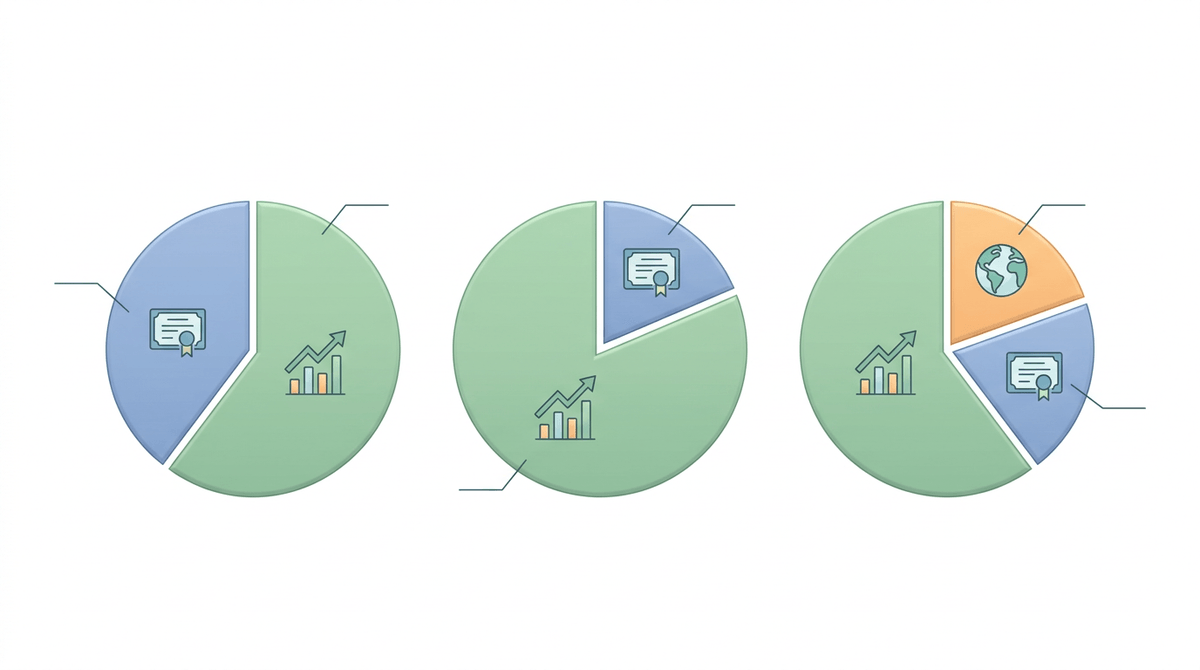
For holdings, keep it to 1–3: (1) one target-date or balanced index fund, or (2) total U.S. stock + bond fund, or (3) add an international stock fund if you’ll keep the percentages steady. Write the exact fund names and your split, then place the first automated order.
Your low-maintenance ‘after this’ plan (so you don’t restart the debate every week)
Once the first automated order is placed, the usual failure mode is reopening the app after a red week and “shopping” for a better plan. Don’t give yourself that opening. Set two calendar events: a 5-minute monthly check (confirm transfers and buys went through) and a 20-minute quarterly check (compare your percentages to your target split).
Only change holdings if a life fact changed: your timeline, your job stability, or your sleep when markets drop. Otherwise, rebalance only when you’re clearly off (for example, 5+ percentage points from target). The hassle is taxes and fees: in taxable accounts, selling to rebalance can trigger taxes, so prefer rebalancing with new contributions.