Profit is showing up—so why does investing still feel risky?
You look at the bank balance, see steady profit, and still hesitate. That’s normal. For most owner-operators, “extra cash” isn’t extra—it’s a mix of upcoming payroll, vendor bills, taxes you haven’t paid yet, and the month when two clients pay late.
Investing feels risky because the risk isn’t just the market going down. It’s putting money somewhere you can’t get it back fast enough without a penalty, a delay, or a bad sell decision. Even a “safe” investment can be the wrong move if it leaves you short when the next quarter gets expensive.
The way out is simple: before you pick an investment, get clear on what cash is already spoken for this quarter—and what’s truly free to move.
Before you invest a dollar: what cash is actually “spoken for” this quarter?
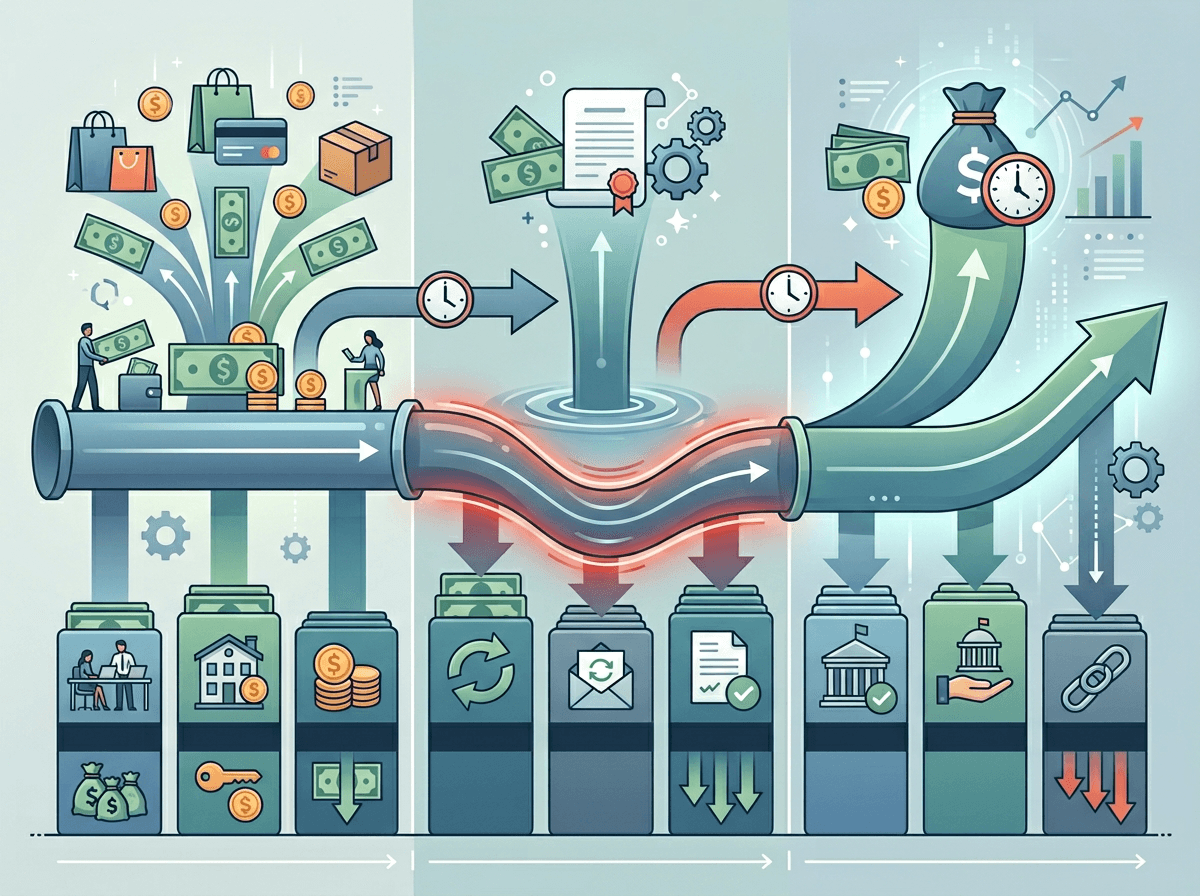
“Spoken for” cash usually shows up the same way every quarter: payroll dates on the calendar, rent and software on autopay, a couple of vendor invoices that always land together, and a tax payment that’s easy to ignore until it’s due. If you invest first and sort it out later, you end up selling at the wrong time—or pulling from a credit line you didn’t plan to use.
Start with a plain list for the next 90 days: payroll (including your own draw), recurring bills, known one-offs (insurance renewals, equipment, annual licenses), and debt payments. Then add the ugly stuff: slow-paying clients and any seasonal dip you’ve seen before. A simple way to stress-test it is to assume your two biggest receivables show up 30 days late and see what breaks.
What’s left after that is your investable number for this quarter. It may feel smaller than you hoped. That’s the point—and it sets you up to handle the tax bill you can’t see yet.
The tax bill you can’t see yet (and how to stop it from ambushing cash flow)
That tax bill is the sneakiest “spoken for” cash because it often isn’t tied to a calendar reminder until it’s almost due. You get paid, you cover payroll and vendors, and the remaining balance looks investable—right up until estimated taxes, payroll tax deposits, sales tax, or an income tax payment hits in the same window.
The fix is boring and effective: treat taxes like a separate bill and move the money as revenue comes in. Many owner-operators do this with a second bank account labeled “Tax,” funding it weekly or per deposit. If you’re not sure what percentage to set aside, start higher than you think, then correct after you review the last two quarters with your bookkeeper or CPA.
The real-world hassle is timing. Tax rules vary by entity type and state, and “profit” on your P&L can diverge from cash in the bank. When you can predict the next payment amount and due date, you can invest without the surprise.
When a “safe buffer” is too small—or unnecessarily huge
Once you’ve got taxes corralled, the next place cash plans break is the “safe buffer.” Most owners set it by feel: a round number that seems responsible. Then a vendor wants payment early, a key employee takes time off, or a slow month stretches into two—and you’re suddenly choosing between selling investments or stressing your line of credit.
A practical buffer is tied to what it costs to keep the doors open, not what’s sitting in the account. Start with your average monthly fixed outflow: payroll, rent, insurance, debt payments, and the recurring software you can’t shut off without pain. Then decide how many months you need based on your reality. If your revenue is lumpy, your customers pay late, or you’re one surprise repair away from downtime, you usually need more months than a steady retainer business.
The other failure mode is hoarding cash “just in case” until investing never happens. Cash feels safe, but inflation still raises your costs while the buffer sits there. Set a floor (your minimum) and a ceiling (anything above it is a candidate for investing), and you’ll be ready for the question that trips people next: whose money is this to invest—yours or the business’s?
Are you investing as the business or as you personally—and does it matter here?
That question comes up fast when you’re about to move money out of the operating account: is this a business investment decision, or a personal one? In real life, it shows up as “Should I open a brokerage under the LLC, or just transfer this to myself and invest it?” The answer changes what the money is for and how easy it is to unwind if you guess wrong.
If the cash might need to come back for payroll, taxes, or a slow month, keep it in the business and treat it like working capital—even if you invest it in something conservative. If the cash is truly surplus and you’re taking it out anyway, investing personally often fits better, especially if it connects to retirement accounts and a clearer long-term plan.
The real constraint is friction: moving money across entities, tracking basis, and staying clean on bookkeeping takes work and mistakes get expensive. Before you pick an account, get honest about your timeline—because “investable” changes when you might need the money sooner than you’d like.
Your timeline isn’t ‘long-term’ if you might need the money in 18 months
If you might need the money in 18 months, it usually doesn’t feel urgent today. Then a lease renewal shows up, a key hire becomes available, or a customer churns, and “we can leave this invested for years” turns into “we need cash by next quarter.” That’s when normal market swings stop being noise and start becoming a problem you have to act on.
Set your timeline by naming the likely uses. If the cash could fund inventory, equipment, a tax catch-up, or a slow season, treat it as short-term money even if you hope you won’t touch it. That usually means keeping it in cash or very conservative options you can exit quickly without a big hit.
The downside is you’ll give up upside. But you’ll also avoid the worst kind of loss: selling at a bad time because the business needs cash on a deadline. Once the “needs-soon” bucket is clear, the rest can earn more without keeping you on edge.
Simple beats clever: choosing a low-maintenance approach you’ll stick with

Once the “needs-soon” bucket is clear, a lot of owners go hunting for something smarter than everyone else. That’s usually when investing turns into another part-time job: checking headlines, tweaking allocations, and second-guessing every dip because it’s “business money.” A simple default works better. If this is long-horizon cash you won’t need for operations, pick one diversified, low-cost fund mix you understand (for many people, that’s a broad stock index fund paired with a bond fund), then contribute on a schedule.
The point isn’t to maximize returns in a spreadsheet. It’s to avoid a plan you abandon the first time you get busy. The real-world constraint is time and attention: tax deadlines, client fires, and payroll don’t leave room for monitoring ten holdings or chasing the newest strategy.
Simple also makes your rules easier to enforce—especially the rules for when you pause investing.
Make it automatic—but with clear rules for when to pause investing
Those pause rules are what make “automatic” safe. Set one simple transfer schedule (weekly or per deposit) from operating cash into your chosen account, but only after your tax account is funded and your buffer stays above your floor. If your buffer drops below the floor, you pause contributions—no debate, no “just this once.”
Use clear triggers you can see in a bank balance: two big receivables go past 30 days, payroll coverage drops under the next two runs, or a known expense (insurance, equipment, a tax payment) is within 30 days and not fully set aside. The annoyance is you’ll pause in the same quarters you feel eager to “make progress.” That’s the point: it keeps investing from becoming a cash-flow emergency.